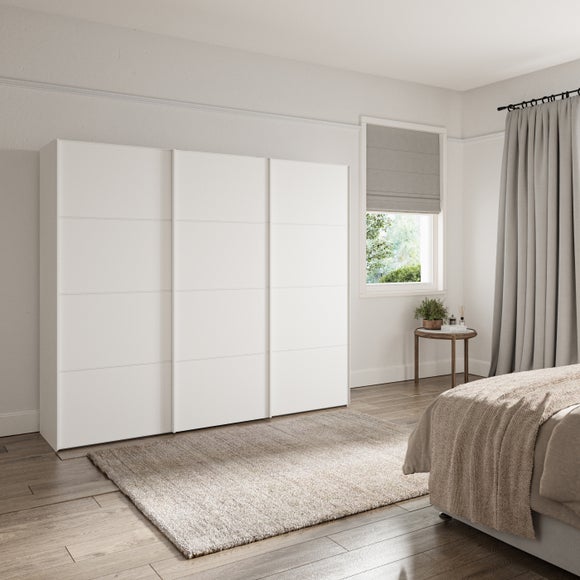
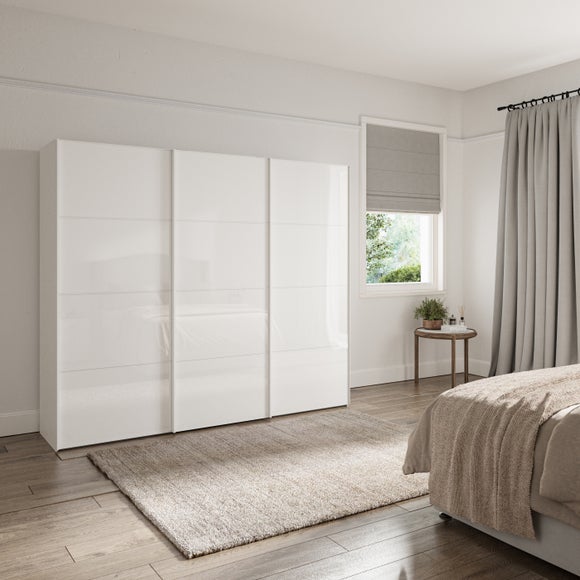
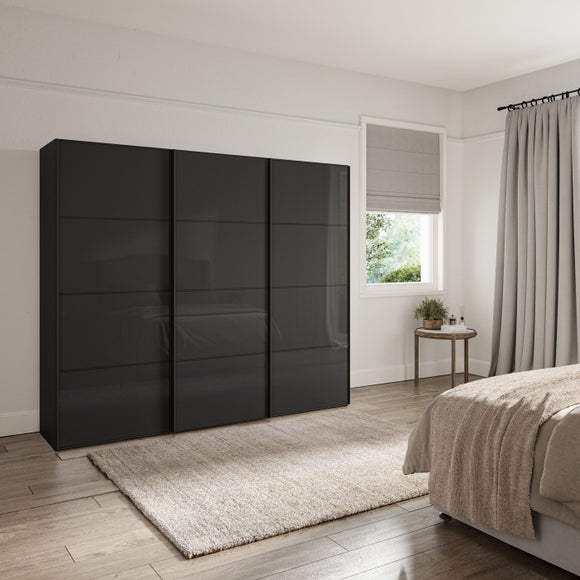
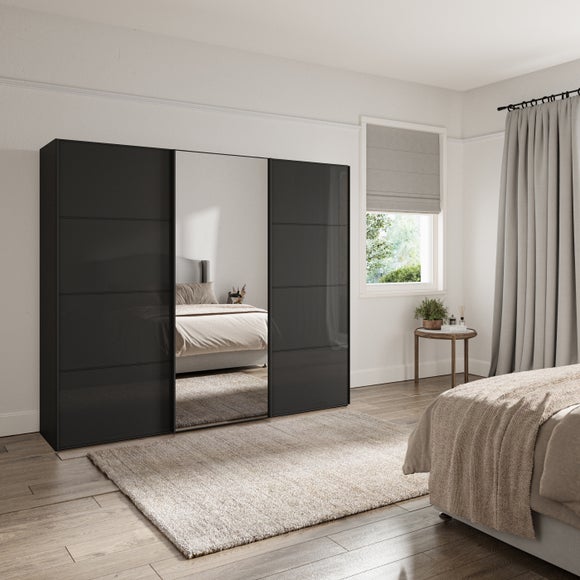
What are the downsides of a sliding door wardrobe?
The main downside is access: only part of a sliding wardrobe is open at any time, so you can't see or reach the whole interior at once. The tracks can collect dust and fluff and need an occasional clean, the runners can wear or jam over time, and large mirrored or glass doors are heavy. Cheaper systems can also rattle or sound noisy as the doors move. If you want to see everything at a glance, hinged doors are the better choice.
What is the typical cost of a built-in sliding door wardrobe?
Built-in (fitted) sliding door wardrobes are made to measure, so the price depends on the size of the opening, the door finish and what goes inside. As a rough guide, a small fitted run can start at around £1,000 and a full-wall wardrobe with mirrored doors and a custom interior can cost £3,000 or more, including fitting. Prices vary between suppliers, so it is worth getting a few quotes. A freestanding sliding door wardrobe is usually much cheaper and needs no fitting.
Can you put sliding doors on a wardrobe?
Yes, if it is a fitted wardrobe or an alcove. A sliding door kit (track, rollers and doors) can be fitted to an existing opening, as long as the opening is measured accurately and the floor and ceiling are reasonably level. A freestanding wardrobe with hinged doors is not usually suitable, because its frame isn't built to carry a track, so it is normally easier to choose a wardrobe that comes with sliding doors.
How much do sliding wardrobe doors cost?
Sliding doors on their own vary with the size of the opening, the finish and whether they are made to measure. As a rough guide, a basic pair of ready-made doors with a track can start at around £150, while larger mirrored, glass or made-to-measure sets can cost several hundred pounds or more, before any fitting. Wider openings need more doors, which adds to the cost.
What are common problems with sliding wardrobes?
The most common problems are doors that stick or jump off the track, usually from dirt in the runners or worn rollers, doors that drift out of line when the floor or frame isn't level, and rattling or noisy doors on cheaper systems. Most are easy to fix: clean the track, apply a little silicone spray, and adjust or replace the rollers. Keeping the track clear of dust helps prevent them.
Which wardrobe is better, a sliding or a door?
It depends on your room. Sliding door wardrobes need no space in front to open, so they suit small bedrooms, narrow rooms and spaces where a hinged door would hit the bed or other furniture. Hinged door wardrobes open fully, so you can see and reach everything at once, and they tend to be simpler and often cheaper. If you have the room to swing the doors, hinged is the easy choice; if you don't, sliding is usually better.